

Humidity lighting tips
A quick lighting note on coastal conditions for projects where salt air can affect fittings and finish over time.
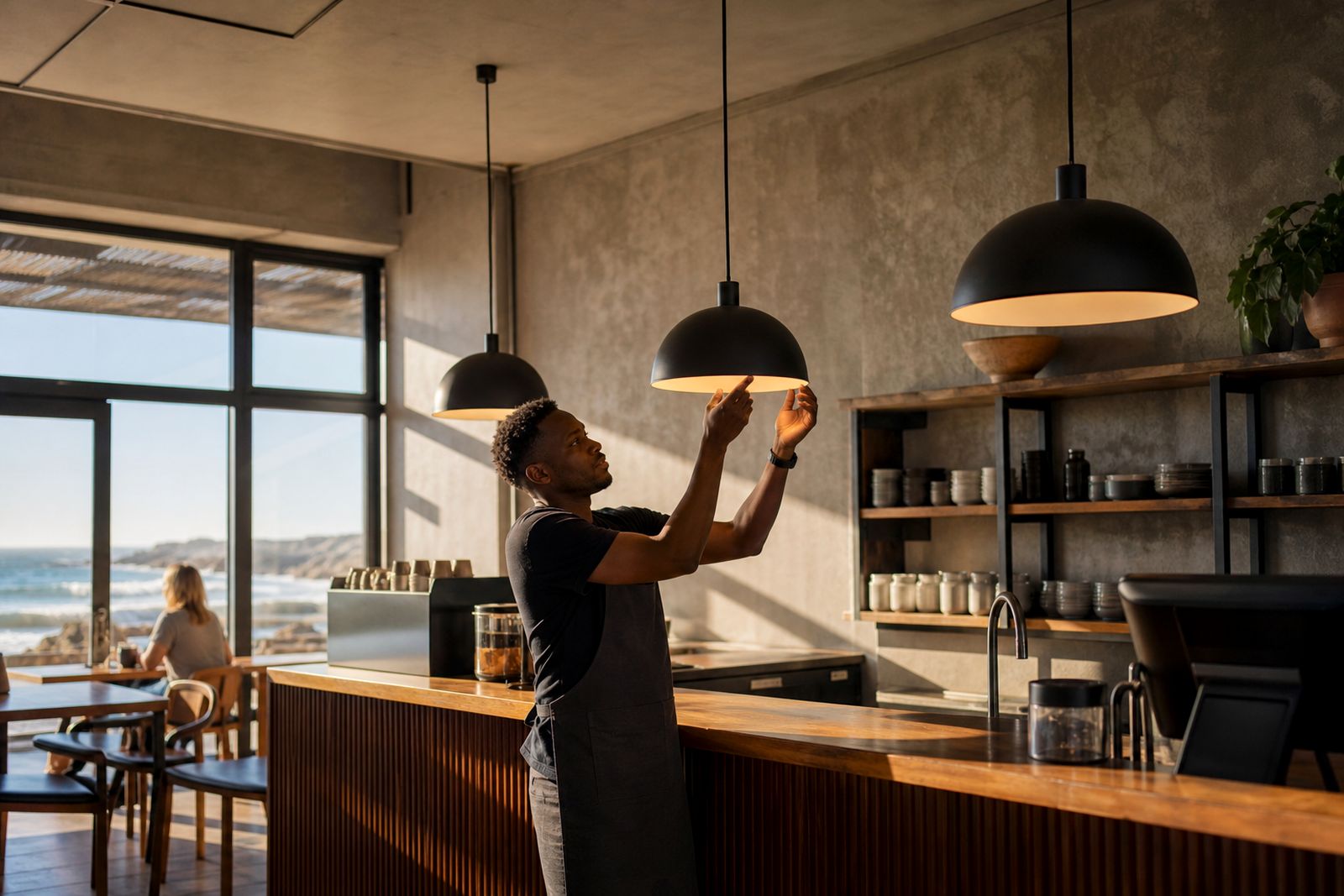
Checks for salt air sites
Pendant lighting plans often go wrong in small ways: no ceiling height on the brief, no note on beam spread, or fittings ordered before the switch layout is checked. This page covers what to confirm when LED pendants are going into damp coastal air or enclosed interiors.
Humidity changes how a pendant fitting ages, especially near the coast. The focus is on finish choice, enclosed ceiling voids, and openings that pull in damp air from outside. For damp rooms, ask for our humidity tips through the contact form.
- Distance from shopfront or entrance noted
- Finish listed as powder-coated, painted, or plated
- Pendant range named from the product page
- Ceiling height, room use, and town recorded
Read the fitting page with this journal note, not on its own. One gives the pendant specification, while this page highlights where moisture, sea air, or poor ventilation can shorten the life of a finish.
Where moisture causes trouble
This page looks at pendant lighting for coastal projects where salt air and moisture can affect fittings over time. Finish choice matters more in these spaces, especially near shopfront openings and café entrances. A pendant that suits the local conditions will usually age better on site.
Coastal projects need a different checklist from inland retail and office work. Durban and Cape Town sites often need closer attention to corrosion on canopies, suspension parts, and exposed metal near doors. Small enclosed interiors can also trap damp air even when the building is nowhere near the sea.
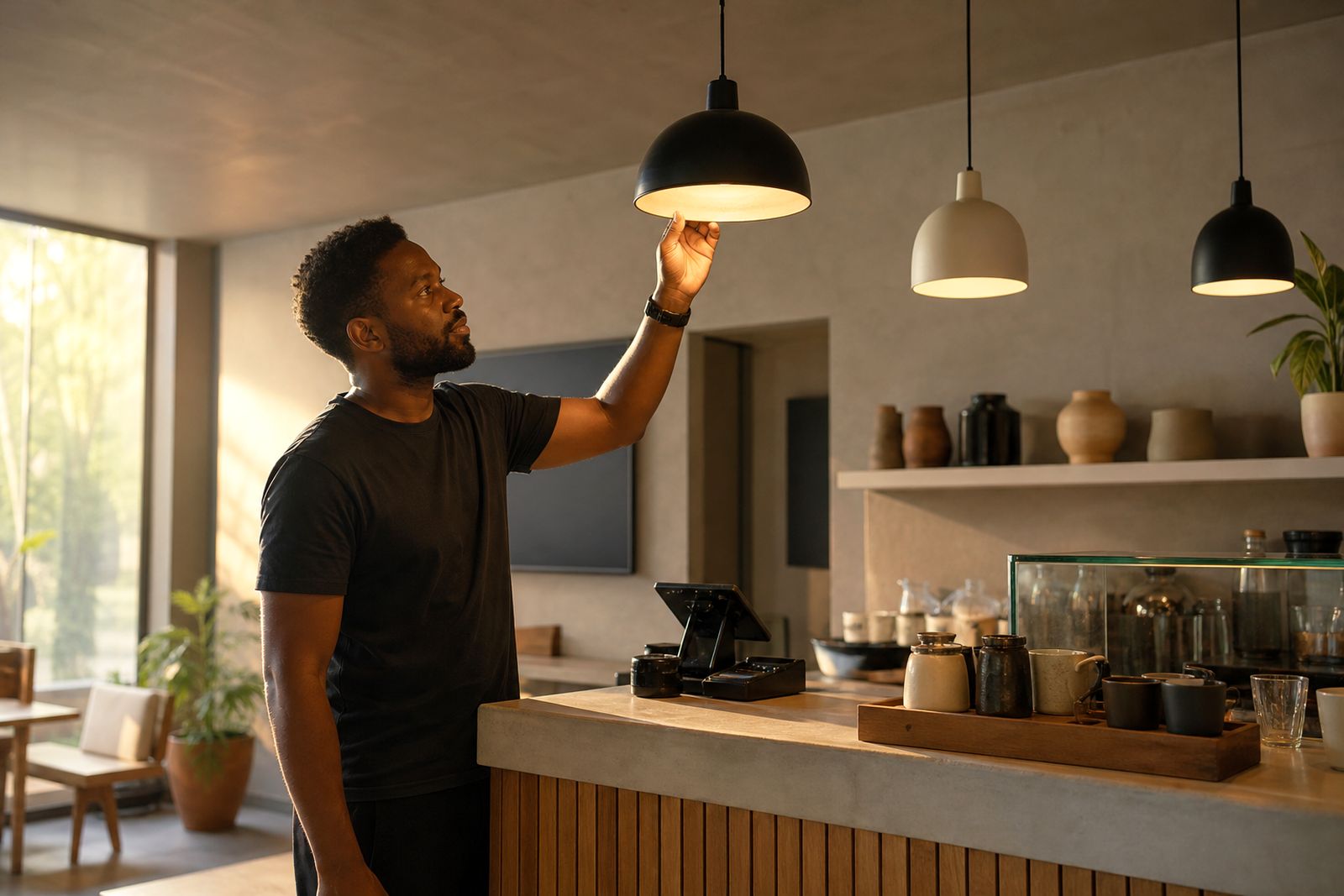
A ceiling photo helps more than a long explanation. It shows whether the pendant hangs in open air, under a bulkhead, or close to glazing where condensation may appear early in the day. That context changes both finish selection and maintenance planning.
Useful notes to keep
Keep a record of the finish, mounting point, and switching layout with the project file. It is easier to compare options when the beam spread, hanging length, and site conditions are written down together. For humid spaces, small omissions usually become visible after the customer’s qualified electrician or fit-out team has completed the installation.
Before expanding the schedule, compare these humidity notes with the room type and the fitting range. Check the fitting details against the actual site conditions, especially for coastal jobs in Durban. Room size, ceiling height and the light colour you prefer guide the fittings we suggest.
- Pendant suited to the room conditions
- Ceiling photo saved with the first check
- Finish and layout details sent by the contact form
Conditions seen on SA sites
Many projects start with existing ceilings, old switching positions, or shopfronts that stay open for long trading hours. In coastal centres, that mix can bring salt air deeper into the interior than the plan first suggests. Note whether the pendant sits near the entrance, above a counter, or in a back office with limited airflow.
Humidity is not the only site factor worth recording. Inland dust affects cleaning frequency, while power cuts change when fittings can be tested and viewed after dark. It helps to pin down mounting and finish questions before ordering starts.
Details worth adding early
Write down the ceiling height, pendant drop, finish colour, and any signs of damp near the planned fitting point. Add whether the space is a café, shop, or office area, because operating conditions differ. These humidity tips help keep the selection tied to the actual site, not a generic fitting list.
What our Pendant Lighting customers say
Verified Google reviews
Also worth a look
Tell us about your ceiling
Send a note through our contact form with the room type, ceiling height and finish, the counters, tables or aisles to light, the light colour you want and your area, and we will come back with practical pendant options and a quote.
Open the contact form