

Switching habits that help LED pendants last
Practical switching habits for shops, cafes and offices that help LED pendants last, with dimming, timers and restart steps for load-shedding.
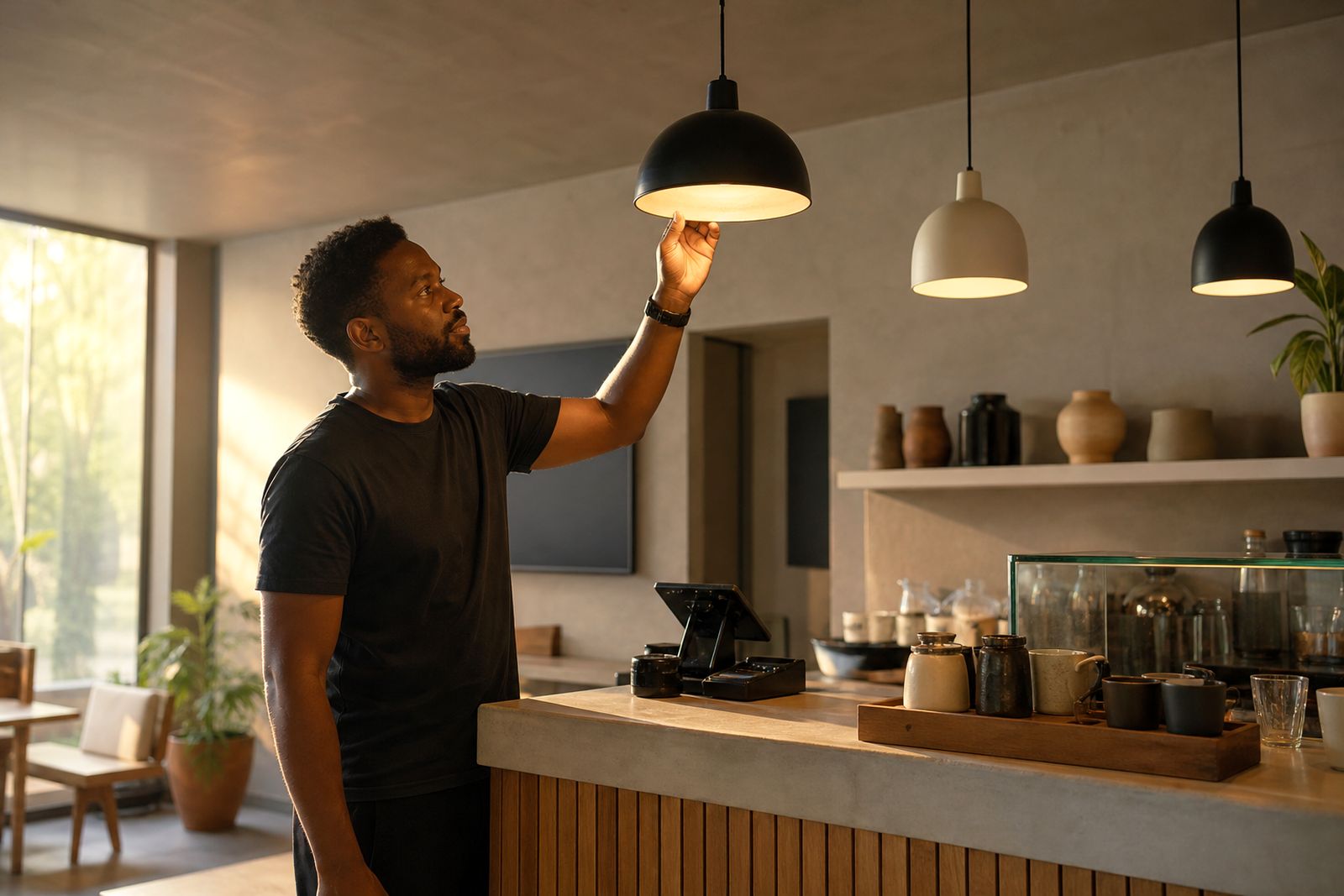
Switching habits that matter
Small changes in how pendant lights are switched can help them last longer in shops, cafes, restaurants and offices. The key is to avoid unnecessary full-power use, sudden on and off cycling, and long hours at the brightest setting when softer light will do.
For fit-outs that use LED pendant lights, linear pendants or cluster pendants, ask your qualified electrician or fit-out contractor to set the switching pattern to suit the space. That can include separate circuits for display areas, seating areas and back-of-house spaces, so only the lights that are needed are on.
Use the contact form if you need help choosing pendants, ceiling roses, cable and suspension kits, dimmer kits, drivers or spares for your project.
- Switch off display lighting when the shop is closed
- Keep only task areas on after trading hours
- Use separate switches for different zones
- Match the switch plan to opening and closing routines
We supply pendant lighting parts and advice on product choice. Your own qualified electrician does the on-site wiring, hanging and connecting.
Use dimming where it suits the space
Dimming can help LED pendants last by reducing heat and easing electrical stress, especially where the same lights stay on for long trading hours. In a cafe, restaurant or office, a lower light level in quieter periods is often enough and can make the room feel more comfortable too.
Before adding a dimmer kit, make sure the pendant, driver and circuit are all suitable for dimming. Your qualified electrician should confirm compatibility and set the control method correctly. A mismatched driver or dimmer can cause flicker, poor response or early failure.
For the best result, use dimming as part of the day plan. Bright at open, lower during slow periods, and brighter only when the space needs it for cleaning, stock work or evening trading.
Timers and simple control routines
Timers are useful in places where staff may forget to switch off lights at the end of the day. They help keep pendant lighting from staying on longer than needed, which can extend lamp life and reduce wear on the system. In offices, timers also help keep a steady routine for opening and closing.
A basic control routine can be just as helpful. For example, a front-of-house circuit can come on at opening time, step down later in the day, and switch off after closing. Back-of-house pendants can stay separate so they are only used when staff need them.
Where a building has several areas, ask for a simple switch map from your electrician. That makes it easier for staff to know which switch controls which section, and it reduces accidental overuse of all the lights at once.
What to do after load-shedding
After load-shedding, switch LED pendants back on in a calm, staged way. If several circuits are restored at once, it can create a sudden load on the system. A better habit is to bring lighting back in steps, starting with the areas that are needed first.
If a pendant does not come back on after power returns, leave it off and ask your qualified electrician to check the driver, wiring and controls. Do not keep cycling the switch on and off. Repeated switching can put more stress on the driver and may make the fault worse.
In shops, cafes and offices, it also helps to check dimmer settings after a power outage. Some controls reset, and the light level may be different from what staff expect. A quick restart check keeps the space consistent and avoids unnecessary switching.
Choose the right parts for long use
The right parts make good switching habits easier to follow. Ceiling roses, cable and suspension kits, dimmer kits, drivers and spares should all suit the pendant type and the way the space is used. That matters in busy places where lights are switched often or run for long trading hours.
For a clean and practical fit-out, choose the pendant style that matches the ceiling height, room size and daily routine. Linear and cluster pendants can work well in larger spaces, while single pendants suit focused areas such as counters, tables or meeting points.
Ask for a quote through the contact form and tell us how the space will be switched each day. We will help you choose the right LED pendant products for shops, cafes, restaurants and offices. Your own qualified electrician and fit-out contractor handle the on-site work.
What our Pendant Lighting customers say
Verified Google reviews
Also worth a look

Tell us about your ceiling
Send a note through our contact form with the room type, ceiling height and finish, the counters, tables or aisles to light, the light colour you want and your area, and we will come back with practical pendant options and a quote.
Open the contact form