

Highveld dust care
On the Highveld, dust collects fast on open fittings, so enclosed or easy-clean pendant options are often the better call.

Notes for dusty inland ceilings
On the Highveld, open ceilings and busy trading floors can leave fittings needing regular attention. This note covers pendant lighting in inland spaces where dust build-up can affect how clean and crisp a scheme looks.
Highveld sites ask different questions from coastal ones. Dust from open ceilings, stock movement and nearby roads shows quickly on shades, cords and lamp holders, so enclosed pendants and wipe-clean finishes are usually easier to maintain.
- Ceiling height and void noted
- Current fitting photo included
- Pendant type identified by range name
- Shop or office area clearly described
Use the relevant pendant range alongside the room application. One helps with the fitting style and construction, while the other helps place it in a shop, café or office where dust and cleaning access matter.
Highveld dust in daily use
Dust on the Highveld is a real consideration when choosing pendants for inland shops and offices. Open fittings can collect dust quickly, so enclosed or easy-clean options often make more sense. That choice can keep ceilings looking tidier between cleaning cycles.
Begin with where the pendant will hang and how often that area gets cleaned. In Johannesburg and other inland centres, open trusses, exposed services and busy trading spaces can leave top surfaces looking dull far sooner than expected. That shifts attention to enclosed diffusers, simpler forms and finishes that do not show every mark.
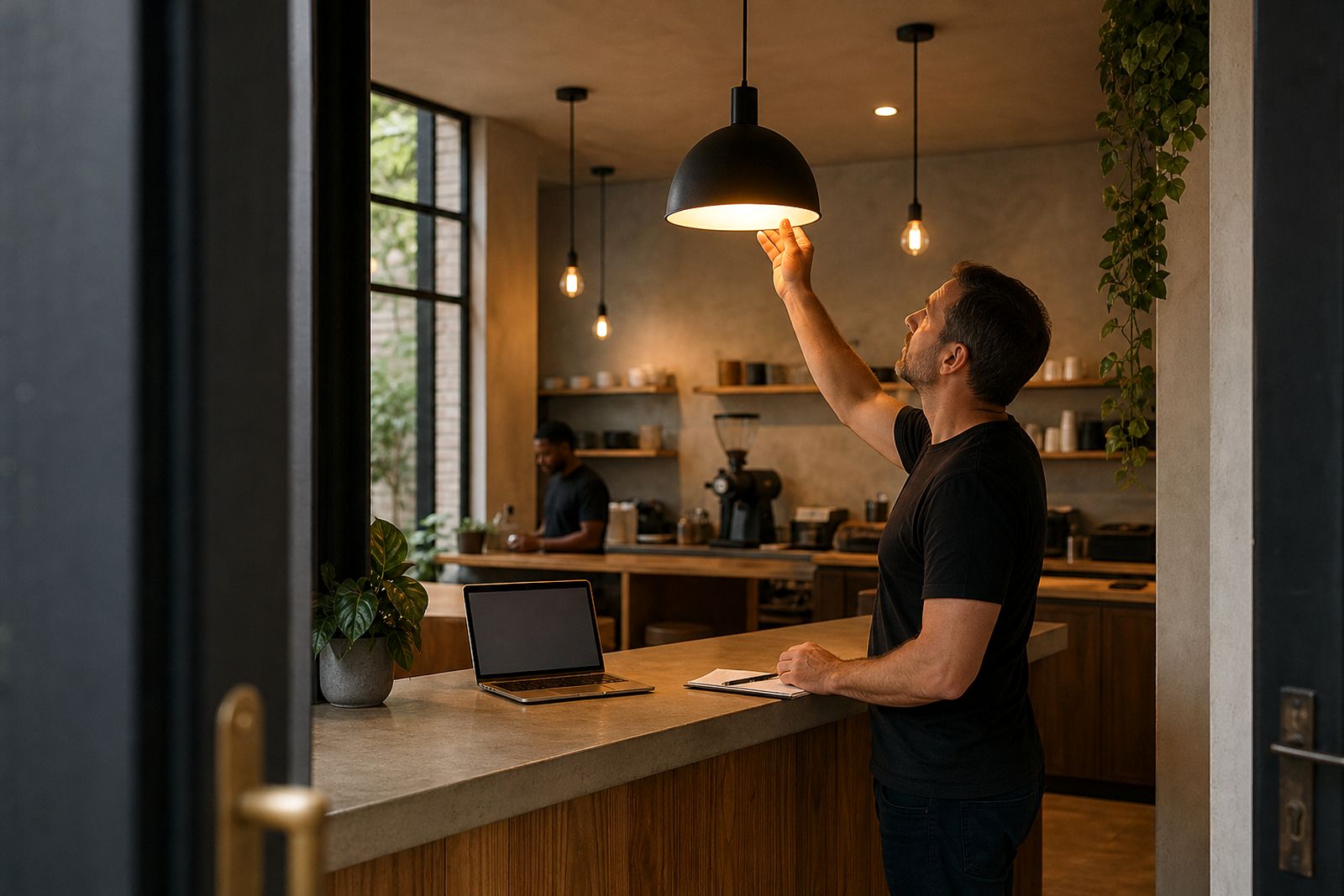
A first ceiling photo tells you plenty about dust risk. Cable trays, rafters, fresh-air movement and nearby stock shelving often explain why one fitting stays tidy and another needs constant wiping. Keep a short note with the image so the electrician or fit-out contractor can match drop lengths and fixing points to the actual ceiling.
What this note should settle
The outcome should be a pendant direction that suits inland upkeep, not only the look of the room. That means naming the fitting style, the likely cleaning demand and any ceiling constraints before quantities are finalised. A neat scheme on paper is less useful if the chosen fitting traps dust above eye level.
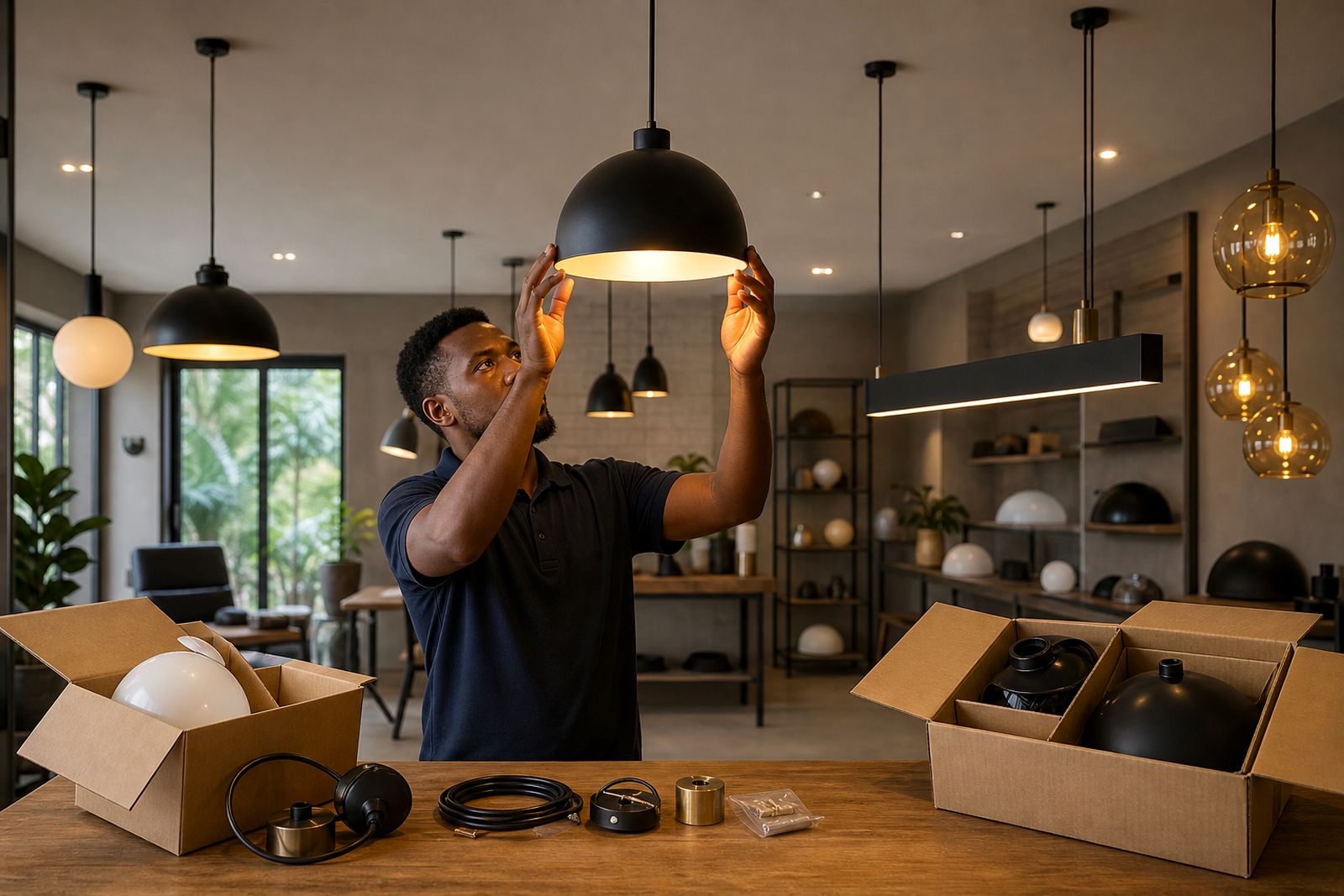
Read the room note and a relevant glow entry before adding more pendant types to the list. Recheck quantities, suspension points and finish choice before the order is placed for an inland project. Room size, ceiling height and the light colour you prefer guide the fittings we suggest.
- Pendant choice matched to dust exposure
- Ceiling condition recorded from the start
- Project notes sent through our contact form
Site conditions that change choices
South African projects rarely arrive as empty shells. Mall trading hours, office access, existing bulkheads, concrete soffits and suspended grids all affect how a pendant can be fixed and cleaned later. For a working site, note which area needs replacement now and which areas can wait for the broader lighting plan.
Coastal humidity can be hard on finishes, while Highveld dust settles fast on exposed parts and upper ledges. Load-shedding also changes testing windows and how warm light reads once daylight drops. A showroom visit is most useful after the ceiling type, fitting style and maintenance preference are clearly listed.
Notes worth sending early
Share the ceiling information while measurements, access limits and existing fittings are still easy to verify. It is most useful beside the product sheet and project record, especially where the buyer needs a clear reason for choosing enclosed or easy-clean pendants.
What our Pendant Lighting customers say
Verified Google reviews
Also worth a look

Tell us about your ceiling
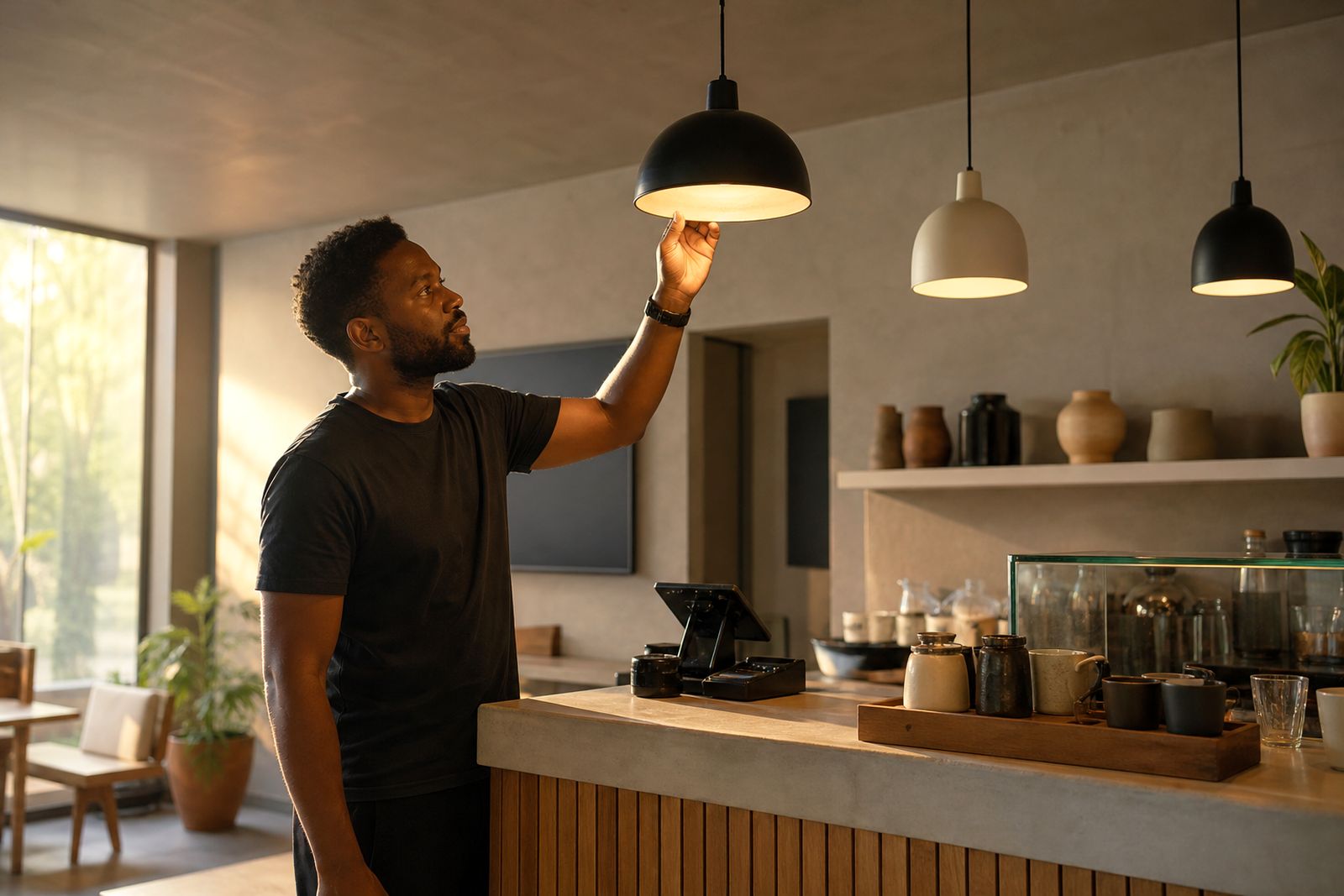
Send a note through our contact form with the room type, ceiling height and finish, the counters, tables or aisles to light, the light colour you want and your area, and we will come back with practical pendant options and a quote.
Open the contact form