

Coastal site
Coastal site covers pendant lighting for South African premises near the sea, where salt air, humidity and exposure affect fittings and cables.
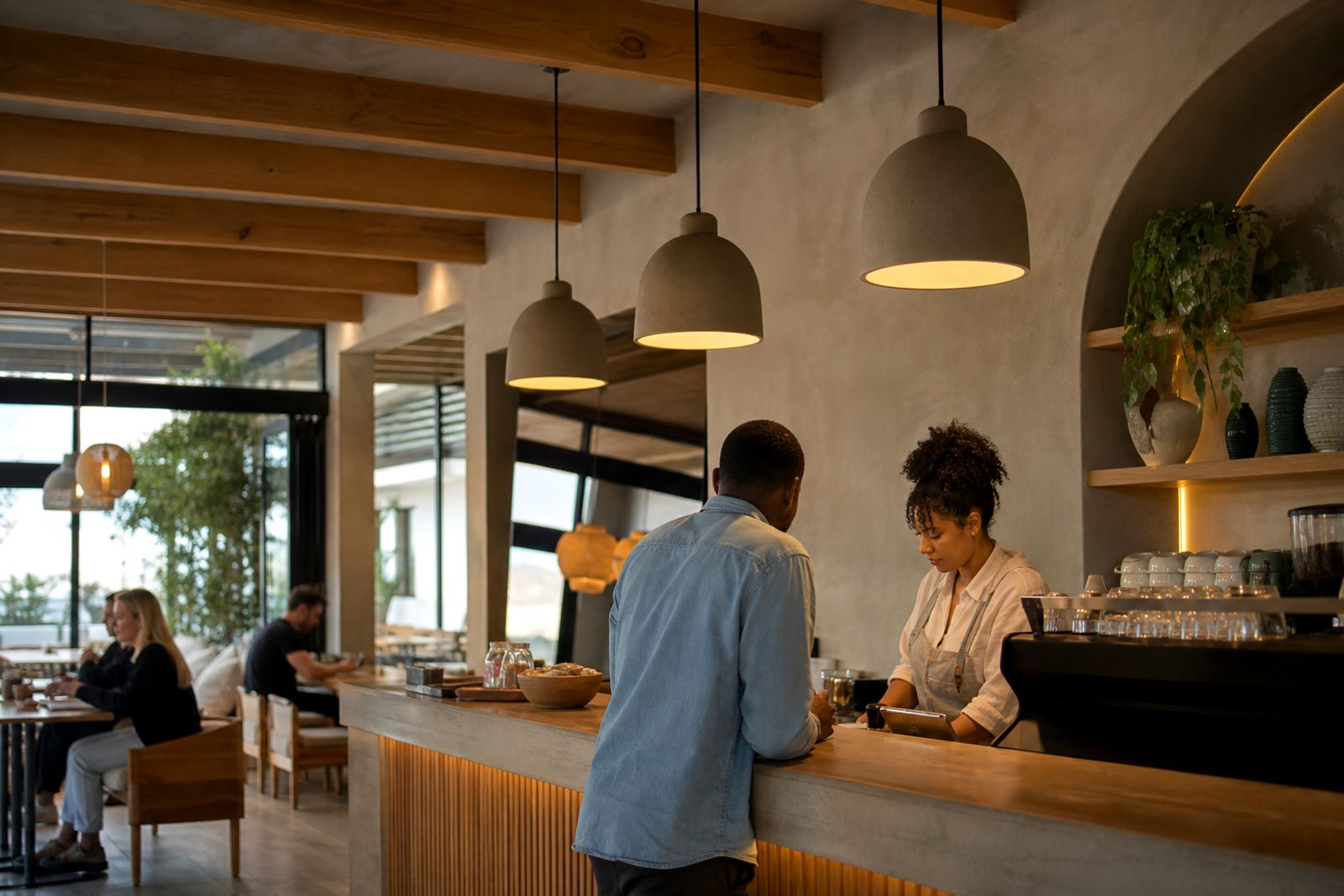
Coastal checks for pendant selection
LED pendant lighting for premises near the South African coast needs to account for salt air, humidity, and exposed service conditions. These can affect fittings, cables, and finishing over time. Choose a pendant lighting approach that suits those conditions.
Begin with where the site sits in relation to the coast, then note the ceiling build and daily trading pattern. Salt-laden air, moisture, exposed fixings, and generator changeovers can shorten the life of decorative pendants if the wrong finish is specified. For sites in Durban, Cape Town, Gqeberha, and smaller coastal towns, the lighting plan needs to match marine conditions as much as the room use.
A wide ceiling photo is worth sending before any fitting list is discussed. Corrosion marks around suspension points, stained canopies, and brittle cable sheathing often show up there first. That record helps the project file reflect what is happening on site, not what the original drawing suggested.
Checks to make before selecting coastal pendants
Your notes should name the pendant type, finish limits, mounting method, and areas needing closer protection from sea air. Notes should also flag existing rust, ceiling repairs, and any fittings that are failing near entrances or service passages. One coastal ready plan is more useful than a mix of options with no clear reasoning behind it.
Use this coastal note alongside the room note when the premises sit close to surf exposure or windy sea-facing openings. Before any fitting list is finalised, review quantities, finish codes, and any hardware that will be visible once the fittings are in place. Room size, ceiling height and the light colour you prefer guide the fittings we suggest.
- Finishes checked for salt-air exposure
- Ceiling corrosion noted before replacement work
- Keep project notes with the site record
Coastal conditions affecting pendants
Marine air changes how finishes age, especially on exposed stems, canopies, screws, and cable grips. Ceiling voids in trading premises can also hold moisture, which matters when fittings sit near entrances, food counters, or glazed edges. Existing slabs, suspended grids, and patched fixing points must be checked before replacement pendants are specified.
Load-shedding and generator use can alter how warm pendant light reads after sunset in shops, cafés, and office areas near the coast. Cleaning frequency also matters, because salt residue and damp dust can dull finishes faster than inland sites. A showroom visit is useful once you have recorded the ceiling condition and exposure level properly.
What to send for review
Send ceiling photos, timing, and what is already not working. Keep the subject line clear.
Include recent ceiling photos, room use, fitting counts, and any spots where rust, discolouration, or loose suspension parts have appeared. It also helps to note access hours, whether the premises trade through weekends, and which pendants are no longer performing as expected. Add the product sheet to the project record when procurement asks for technical backing.
What our Pendant Lighting customers say
Verified Google reviews
Also worth a look



Tell us about your ceiling
Send a note through our contact form with the room type, ceiling height and finish, the counters, tables or aisles to light, the light colour you want and your area, and we will come back with practical pendant options and a quote.
Open the contact form