

Catalogue refresh
A clear approach to catalogue refresh work for LED pendant products, aimed at teams updating finishes, specs, and application notes.

Updating pendant schedules and finishes
Catalogue refresh shares updates to LED pendant ranges, including changes to finishes, specifications, and application notes. It is useful for trade buyers and project teams working from current product information rather than older schedules.
Catalogue refresh is used when pendant ranges have changed and project files need current information. It brings updated finishes, revised wattages, mounting details, and notes on where each fitting suits retail aisles, café counters, and office ceilings. Teams comparing old schedules against the current range can use it to remove outdated references before selections are finalised.
Include the latest product photos when older images still show previous trims or suspension parts. A refreshed pack should also note replaced models, discontinued pendants, and any shift in colour temperature or beam control that affects layout decisions. That gives specifiers and customer installation teams one working record instead of mixed sheets from different issue dates.
What the refresh should include
A useful update names each pendant correctly and matches it with the present finish options and specification data. It should state application changes plainly, such as whether a fitting now suits a reception counter, retail run, or quiet office ceiling. Clear replacement notes matter when an earlier code no longer matches the product being requested.
Before sending material through the contact form, gather specification changes and a list of pendant models that are no longer available. If a site in Bellville or another location still carries older fittings, mention those existing references so the refreshed catalogue notes can align with what is installed. Add any finish updates that affect visual matching across the project.
- Current photos of each pendant range
- Revised specs for output and mounting
- Discontinued models marked against replacements
Checks for South African projects
Refresh work should reflect conditions found on South African fit-outs, including suspended grid ceilings, exposed concrete soffits, and bulkheads over shopfronts. Retail and office teams often need confirmation that a current pendant still suits the same mounting position shown on an older schedule. Where trading spaces remain open, updated application notes help separate replacement work from wider lighting changes.
Salt in the air can mark certain finishes faster on coastal projects, so the refresh should note current care requirements and any updated finish options. Dust on inland sites changes maintenance patterns, while load-shedding can affect evening assessments and side by side checks against older fittings. Product photos and specification changes are most useful when they match the actual site conditions, not a generic display setting.
Details worth sending with updates
Send current product photos, updated specifications, finish changes, and any pendant models that have been replaced or discontinued.
Send model codes, finish changes, current specification sheets, and notes on any pendant moved out of the range. When buyers or project coordinators are working from older schedules, include the latest product record so every reference points to the same fitting.
Also worth a look
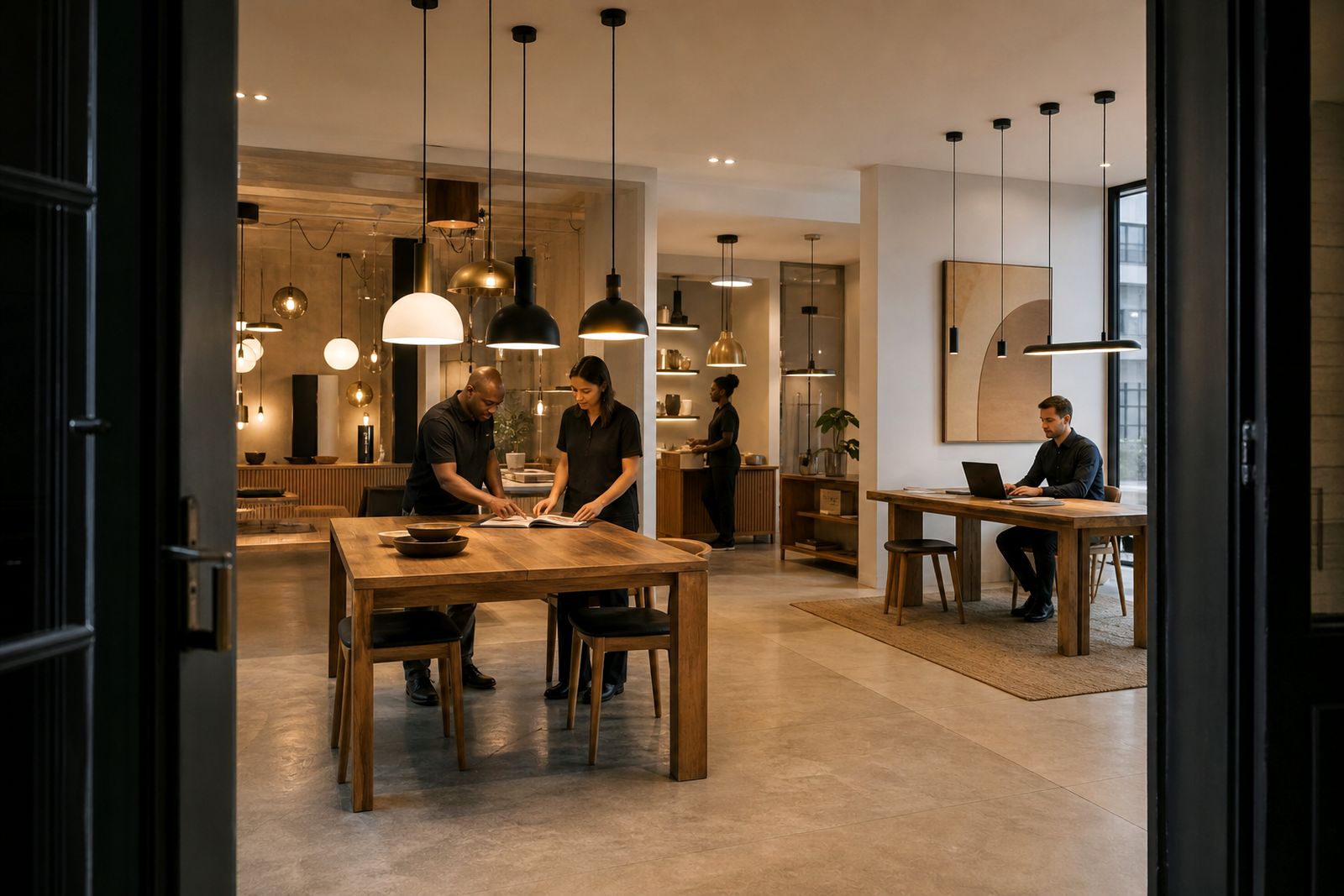



Tell us about your ceiling
Send a note through our contact form with the room type, ceiling height and finish, the counters, tables or aisles to light, the light colour you want and your area, and we will come back with practical pendant options and a quote.
Open the contact form